

Go Back
News
School News
Yew Wah Early Childhood Education: Life’s First Lesson — Learning to Love and Say Goodbye
School News
04 Aug, 2026
10 : 48
Above the pet area in Yew Wah’s ECE hangs a crooked signboard, with a hotpot drawn on the front and the words "Little White Cloud" written on the back. Visiting parents always ask, "Who is Little White Cloud?" The children then tell the story of the hamster that turned into a white cloud, and the journey that began with this little hamster.
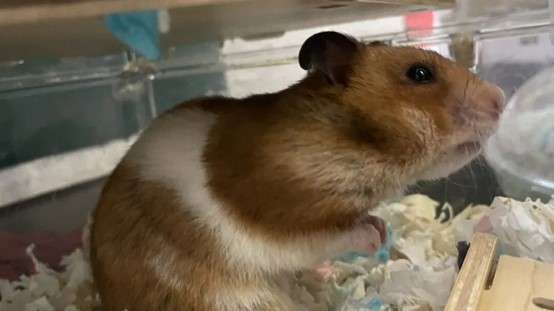
In the classroom, there is a group of special "little teachers" — the hamsters. Their arrival has sparked an exploration of life, care, and growth, showing us that when education returns to authenticity, learning quietly happens through play.
The Beginning of the Story:
From the Zoo to the Pet Area
It all started with the children sharing their experiences from a trip to the zoo. "Can pandas be pets?" "Monkeys are too naughty!" A discussion about animals and pets sparked the children’s excitement about raising pets in the classroom.
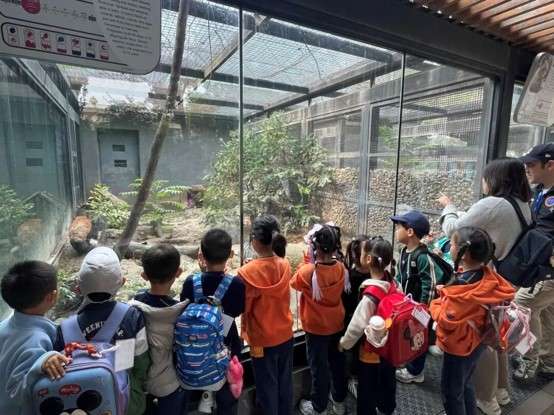
So, the teachers and children together created a "pet area," and the plan to hatch turtle eggs officially began. With thermometers, magnifying glasses, flashlights, and record sheets ready, the children gathered around the pet area and began a long wait.
Guided Reading:
Learning "Not to Rush"
Through Stories
The teacher introduced a traditional Chinese story from early education, "Hua Hua Raising Fish" — Hua Hua was too impatient for the little fish to grow and overfed them, causing the fish to become sick. Through guided reading and interaction, the children listened to the story and for the first time understood the meaning of the ancient saying, "Don’t rush, rushing causes mistakes; don’t fear difficulty, don’t take things lightly."
With collaboration between Chinese and Western teachers, the ancient saying was displayed in both Chinese and English in the pet area: "No rush," "Face the challenge," and so on. The two languages naturally intertwined in a real context. While caring for the little animals, the children absorbed both languages deeply. At the same time, the children not only memorized the ancient saying but also repeatedly verified these lessons through the real experience of incubation and feeding.
The Hamsters Arrive:
Learning Responsibility
Through Care
When the little hamsters Jack and Ruth moved into the classroom, the children’s love and care blossomed fully. They observed the hamsters eating every day, drew houses for them, and made personalized cards. However, their eagerness to touch the hamsters often scared them away. What to do? The teacher guided the children in a group discussion to establish care rules: feed daily, provide water daily, encourage exercise, touch gently, and clean and bathe the hamsters weekly. The children cooperated by dividing tasks—cleaning the cage, gently petting the hamsters, and carefully recording observations—they demonstrated the true meaning of “no rush” through their actions.
At the same time, the teacher used visible thinking strategies to encourage the children to document their hamster care experiences through drawing. They even created their own hamster care manuals. These tender drawings and doodles serve as precious evidence of early writing and expressive abilities.
Revisiting the ancient saying from the traditional Chinese story “Hua Hua Raising Fish,” the teacher led the children to review the story’s phrases and meanings. The children also shared related life experiences. “When I get anxious, I grab the hamster too hard, and it runs away,” said a child who used to be easily impatient. Through reflection, he accurately grasped the core meaning of the ancient saying and, combining it with his own experience, understood the importance of patience. Gradually, the children came to understand the principles of “doing things carefully, persevering through difficulties, and not being careless.”
Farewell and Rebirth:
The Most Touching Lesson
in Life Education
The sudden passing of another classroom hamster, "Little White Cloud," filled the room with sadness. The children discussed how to commemorate it—burying it beside a small tree on the school grounds, erecting a small tombstone, and holding a farewell ceremony. "It will become a cloud in the sky," the children said. They voted to name their pretend new hotpot restaurant "Little White Cloud Hotpot" in memory of the departed Little White Cloud—a way to preserve love through a store.
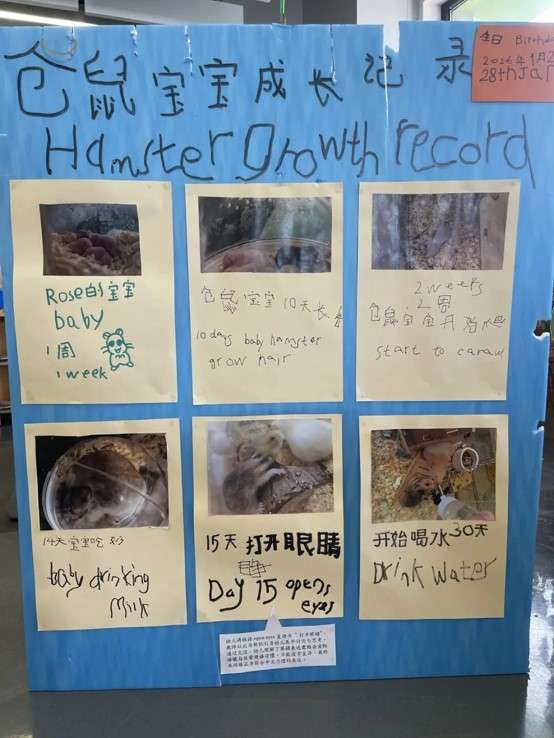
When news came of the birth of new hamster babies, the sadness turned into new hope. The children found a quiet corner for the hamster mother, covered it with a blanket to block the light, visited quietly, and carefully recorded the babies’ growth.
The afternoon sunlight slanted into the pet area, where Jack and Ruth rustled in the wood shavings. Above the cage hung a crooked signboard, with a hotpot drawn by the children on the front and the three characters “Little White Cloud” written by themselves on the back — the strokes were uneven but each one was drawn with great effort. Not far away in a quiet corner, the hamster mother and her new-born babies curled up into a warm little bundle, while several children lay on mats, quietly debating whether the babies had grown a bit today.
On the wall hung the rules they had made together: "Gentle touch," "Feed daily," "No rush." Next to the bilingual vocabulary wall were the storybook "Hua Hua Raising Fish" that had accompanied them and several tenderly made care instruction sheets. Outside the window, under the little tree, the small tombstone stood quietly.
At Yew Wah ECE, no one deliberately "held classes," yet lessons about life, patience, loss, and love were growing day by day in this very corner.



YWIES Beijing Yizhuang is a Child-Safe School
Click HERE for our Child Protection Policies and Procedures
© Yew Wah International Education School of Beijing Yizhuang 2022. All rights reserved